Introduction
Salon Employee Retention: Why Timing Matters from Day One
Salon employee retention begins in the first few days of joining—not after months. In the salon industry, new hires quickly evaluate their workplace based on daily experience, basic facilities, and how quickly their concerns are addressed.
While salary plays a role, it is often the initial management response and working conditions that determine whether employees stay or leave.
The Hiring Scenario
A salon hired four candidates at a monthly salary of ₹20,000, which included ₹1,000 as a food allowance. To support them during their initial days, ₹500 was provided within two days of joining.
Within the next couple of days, the candidates began requesting the remaining ₹500. The salon owner was already prepared to release the balance by the same evening, so payment delays were not the core issue.
However, alongside this, other concerns had already started to build—quietly but steadily.
Problems Faced in the First Few Days
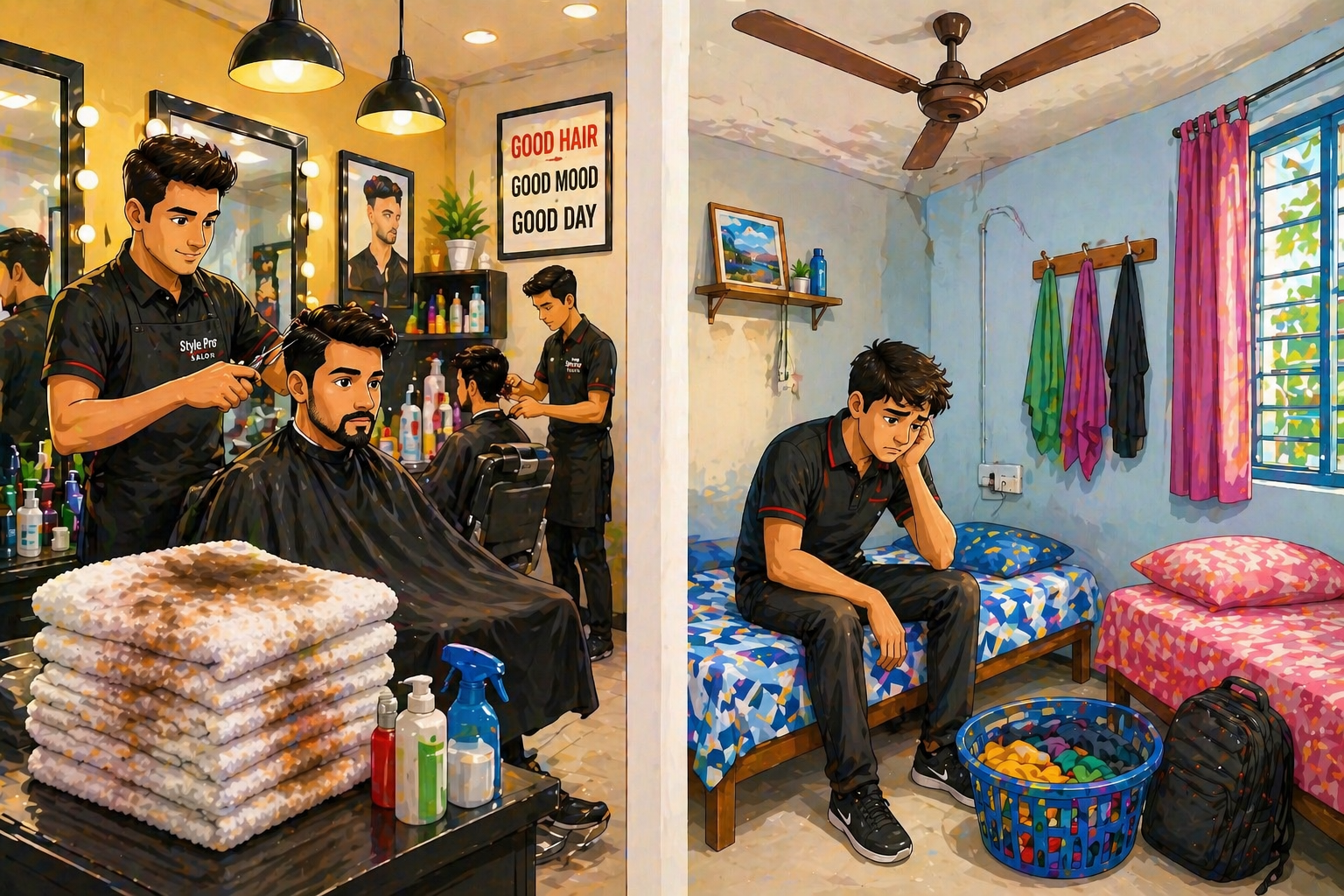
From the early days of joining, the candidates experienced issues related to both salon operations and accommodation:
- Salon-Related Issue
Towels used in the salon were not properly washed or maintained - Accommodation-Related Issues
The fan was not functioning properly
There was no proper space to dry clothes
These concerns may appear minor individually, but they directly affect daily comfort and working conditions. For newly joined staff—especially those adjusting to a new setup—such gaps can quickly influence their overall perception.
What Happened on Day 5
By the fifth day, the situation escalated.
The candidates clearly communicated that they had decided to leave.
It was only at this stage that the concerns were actively addressed. The salon owner stepped in to resolve the issues—cleanliness , the fan, and arrangements for the drying space.
From an effort standpoint, the response was appropriate.
But from a timing standpoint, it was already late.
Despite the solutions being implemented, all four candidates chose to exit.
Why Salon Employee Retention Failed in This Case
This situation reflects a key challenge in salon employee retention—not the absence of solutions, but the delay in applying them.
- Delayed Response to Early Issues
The concerns existed from the start but were not resolved immediately. In the first few days, employees expect quick attention to basic problems. Delays, even short ones, reduce confidence.
- First Impressions Were Already Formed
The first impression of accommodation and management plays a major role. When basic facilities are not ready on Day 1, it creates doubt about overall standards and consistency.
- Repeated Follow-Ups Became Warning Signs
The candidates’ repeated requests—whether for food allowance or living conditions—were early indicators of dissatisfaction. These signals often go unnoticed until they turn into exit decisions.
- Action Came After the Decision to Leave
By the time the issues were resolved, the candidates had already made up their minds. At that stage, solutions feel reactive rather than reassuring.
Key Takeaways for Salon Owners
- First Week Is Critical for Employee Retention
In the salon industry, most early exits happen within the first 7 days. This period should be treated as a priority phase, not a transition phase.
- Be Fully Prepared Before Onboarding
Accommodation and basic facilities should be ready before employees arrive:
Clean and usable essentials
Proper ventilation or working fans
Space for daily routines like washing and drying clothes
- Respond Within 24 Hours
Any complaint raised in the first few days should be addressed immediately. Quick action builds
trust and shows reliability.
- Identify Early Warning Signs
Repeated follow-ups are not routine—they signal dissatisfaction. Acting early can prevent escalation.
- Focus on Experience, Not Just Employment
Providing a job is one part of the process. Ensuring a smooth and comfortable start is what drives retention.
Conclusion
This case clearly shows that employee retention in salons is highly time-sensitive.
The salon owner was willing to resolve every issue—but the delay in addressing them reduced the effectiveness of those efforts.
In a fast-moving hiring environment, especially where relocation is involved, employees make decisions quickly. And once that decision is made, even genuine improvements may not change the outcome.
Because in the end, retention is not just about solving problems—
it’s about solving them at the right time.
Frequently Asked Questions (FAQs)
1. Why is salon employee retention difficult in the first few days?
Salon employee retention is most fragile during the first few days because new hires quickly judge their work environment, accommodation, and management response. Even small issues, if not resolved immediately, can lead to early exits.
2. How can salon employee retention be improved during onboarding?
Salon employee retention can be improved by ensuring that basic facilities like cleanliness, proper accommodation, and working utilities are ready before joining. Quick response to concerns within the first 24 hours also plays a key role.
3. What are common reasons for poor salon employee retention?
Common reasons for poor salon employee retention include delayed action on complaints, poor hygiene standards, inadequate accommodation, and lack of clear communication during the initial days of joining.
4. Does accommodation affect salon employee retention?
Accommodation affects how comfortably staff can manage their daily routine. If basics like a working fan, usable washing area, or space to dry clothes are missing, it becomes inconvenient over time. These are everyday needs, and when they’re not in place, it can lead to frustration and difficulty in settling into the routine.
5. How does delayed response impact salon employee retention?
Delayed response negatively affects salon employee retention because it reduces trust. When employees feel their concerns are ignored in the beginning, they are more likely to leave—even if solutions are provided later.
6. What role does first impression play in salon employee retention?
First impressions are critical for salon employee retention. Clean workspaces, proper hygiene, and ready-to-use facilities create confidence, while early issues can lead to quick decisions to leave.
7. How quickly should issues be resolved to improve salon employee retention?
To improve salon employee retention, issues should ideally be resolved within 24 hours, especially during the first week. Quick action shows professionalism and builds trust with new employees.